Beginner guide
How to start an online business when you are starting from zero
There are a lot of online business ideas out there. That is exactly why the first step feels confusing.
This short guide explains the main options in plain English, and how AI tools are changing the way beginners learn.

Why it feels confusing
Most beginners get stuck before they even start
It is usually not a motivation problem. It is an information problem.
There are too many business models to choose from.
Advice online often points in opposite directions.
There are endless videos, and they all sound convincing.
New words show up everywhere, like funnel, niche, and SEO.
The tech side looks harder than it usually is.
Everyone says their way is the right place to start.
If that sounds familiar, you are normal. The fix is simple: learn the main options first, then pick one.
Online business ideas
Six common paths people explore
Here is a quick tour. None of these are guaranteed to work, and each one takes real effort and time to learn.
Affiliate marketing
You share products you like. If someone buys through your link, the company may pay you a commission.
Digital products
You make something once, like a guide, template, or course, and people can download it.
Content creation
You build an audience with videos, posts, or a newsletter about a topic you care about.
Freelance services
You use a skill, like writing or design, and do project work for clients.
Online services
You help people with ongoing work, like managing social accounts, admin tasks, or bookkeeping.
E-commerce
You sell physical items online. This one usually needs more setup, money, and planning.
A quick tip: pick the one you would still find interesting after a month of learning about it.
What changed
Starting Online Is Changing
A few years ago, a beginner had to figure out most things alone. You searched, guessed, and hoped.
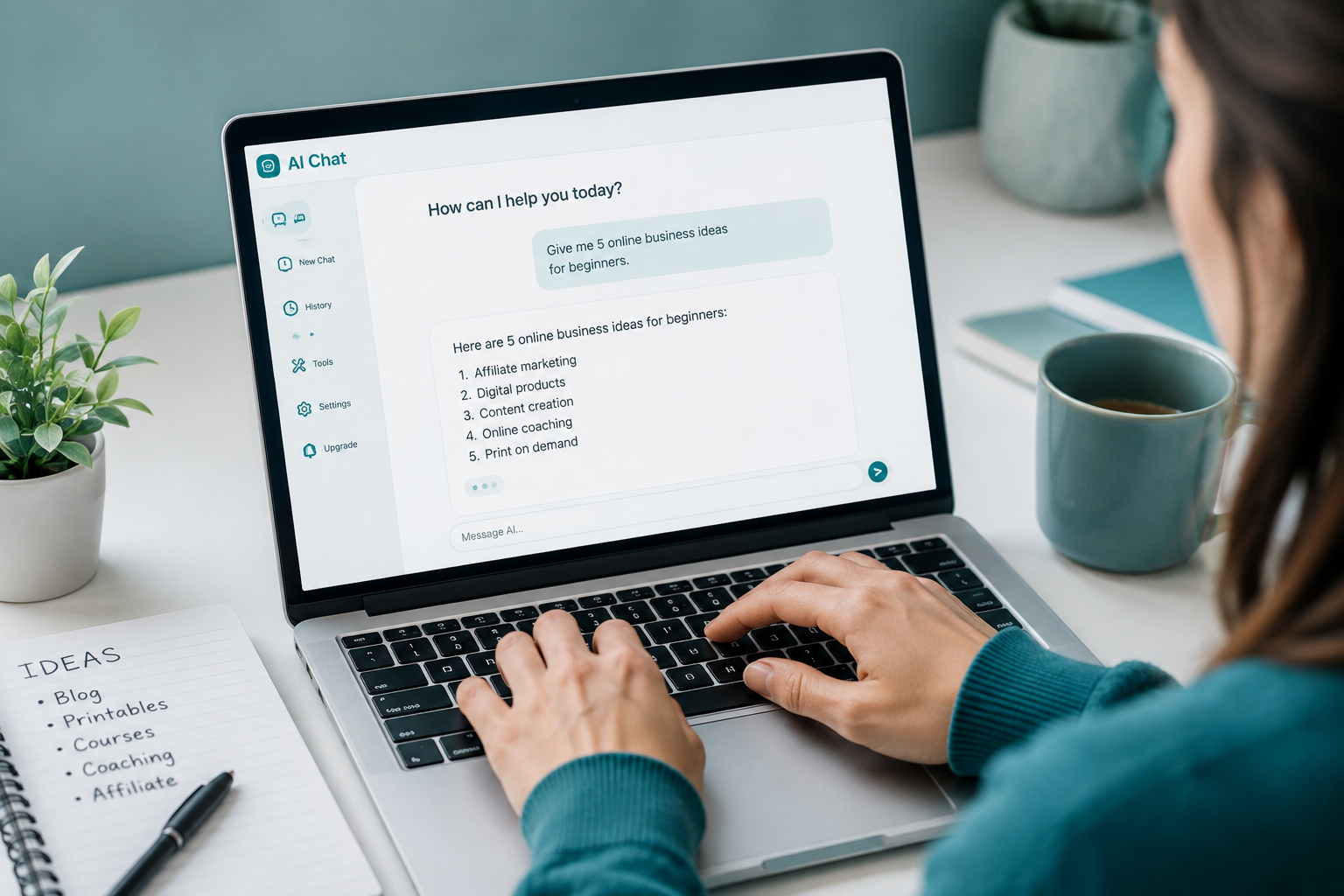
Today, AI tools for beginners can explain things in normal words and help you think through ideas faster.
Ideas
Ask AI to brainstorm topics and possibilities you had not thought of yet.
Writing
Use AI to get a rough first draft on the page, then edit it in your own words.
Research
Ask AI to explain a new word or idea in simple language, then double-check it.
Planning
Turn a messy pile of notes into a short list of simple steps you can follow.
Content
Explore different angles, titles, and creative directions before you make something.
AI is a tool, not a shortcut
AI can speed up parts of the work. It cannot decide what you want, and it does not make a business work. It also gets things wrong, so you still need to check facts, use your judgment, and do the work yourself.
Finding your fit
So which direction makes sense for you?
Two people can try the same idea and have a very different experience. That is because they are starting from different places.
Your interests
What you enjoy reading or talking about.
Your time
A few hours a week is different from a few a day.
Your experience
Skills you already use may give you a head start.
Your comfort with tech
Some paths need more tools than others.
Your goals
A small side project is not the same as a full business.
This is why copying someone else step for step often feels wrong. Their starting point is not your starting point.
Next step
Not sure where you would start?
Answer a few quick questions about your interests, experience, and goals. At the end, you will see which topics may be worth learning about first.
Beginner questions
Common questions
Curious which direction might fit you?
No pressure. Just a few simple questions to help you decide what to learn about next.